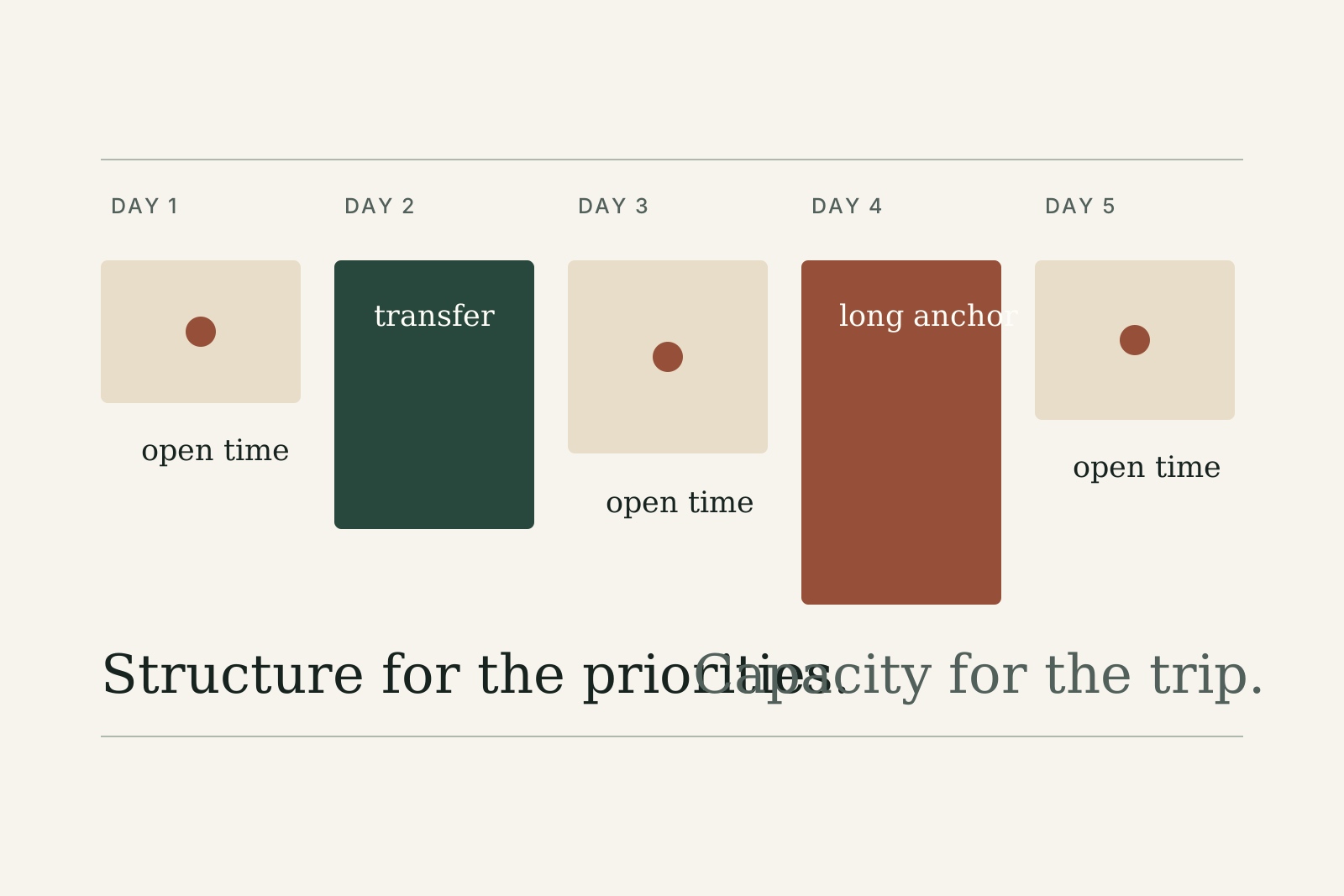
An itinerary can look calm in a list and feel crowded in practice. A two-hour activity occupies more than two hours once the journey, arrival buffer, meal, and return are included. A “short” move between bases can consume the useful center of a day. Even a free afternoon can feel assigned if it carries six saved recommendations.
Room to breathe is not the absence of a plan. It is capacity deliberately left in the plan: somewhere for a long lunch, a delayed train, a second look, or simply a lower-energy day to go.
Describe the rhythm before the sights
Write three sentences about an ordinary day on this trip. When do you want to leave the hotel? How long are you happy to be out before a pause? Do evenings carry another plan, or are they the release valve?
If you are traveling together, compare answers before debating attractions. One person may imagine early starts and long walks; another may be happy with the same priorities but need a slower morning. That is an itinerary problem you can solve. Hidden expectations are harder.
Choose three to five priorities for the trip as a whole. A priority is something you would be genuinely disappointed to miss, not everything that sounds worthwhile. Give the priorities names that explain why they matter: “one long day in the park” is clearer than “see the park.”
Build each day around one anchor
An anchor is the part of the day that determines its geography or timing: a reserved interior, a long hike, a train between cities, or dinner with someone you came to see. Put anchors on the calendar first.
Then add the hidden time around each one:
- getting ready and leaving;
- reaching the correct entrance or platform;
- a sensible arrival margin;
- food before or after;
- the journey onward or back;
- enough transition time to enjoy the next plan.
This does not mean every anchor needs a day. It means the rest of the day should make geographic sense. Pair nearby optional ideas with it rather than crossing the city to fill a blank.
A good working pattern is one anchor, one nearby possibility, and one deliberately unassigned interval. The optional idea should be easy to drop without the day feeling like a failure.
Treat a transfer as a change of state
The timetable shows only the time between departure and arrival. A change of base also contains packing, checkout, the trip to the terminal, waiting, finding the new address, checking in or storing bags, and learning a new set of streets.
Write that complete sequence into the outline. If most of the day becomes logistics, call it a transfer day and keep the ambition honest. A pleasant meal, a first walk, or one resilient stop near the new base can be enough.
When considering another overnight stop, ask what it earns that a day trip or longer stay does not. Sometimes the answer is compelling: early access, a different evening, or relief from a punishing return journey. Sometimes the extra check-in exists only because the route looked sparse on paper.
Give open time a starting point
Unassigned time works better with a little geography. Instead of scheduling three attractions, choose a neighborhood, a market, a waterside path, or a cafe from which several choices are easy. Keep optional ideas grouped by area and energy level.
This lets you respond to conditions without starting research from zero. A wet afternoon might become a museum nearby. A clear evening might extend into a walk. A tired morning can stay close to the hotel without becoming “lost.”
Open time is most useful beside demanding or fragile plans: after a long arrival, around the day most exposed to weather, or before a fixed departure. It is less useful if every unscheduled hour has already become an obligation in your notes app.
Run the late-arrival test
Read the outline once as if everything runs on time. Then read the most complicated day as if you arrive two hours late or the weather makes the first choice unappealing.
Ask:
- Which commitment has a real deadline?
- Which idea can move to another day without displacing something more important?
- Is there a simple nearby alternative?
- Does one delay unravel several reservations?
You are not predicting failure. You are finding the days with no capacity. If a modest delay breaks three plans, simplify before the trip rather than improvising under pressure.
Decide what “enough” means
Pacing is personal. Some travelers enjoy momentum and early starts; others want long meals and repeat walks through the same neighborhood. A breathable itinerary is not automatically a slow one. It is one whose intensity was chosen rather than inherited from a list of recommendations.
The final check is simple: remove one optional item from the busiest day. If the day immediately looks better, leave it out. Then make sure every priority still has a plausible place and every transfer has been counted as work.
What remains is not an unfinished trip. It is a plan with enough structure to support the important parts and enough space for the destination to have a say.