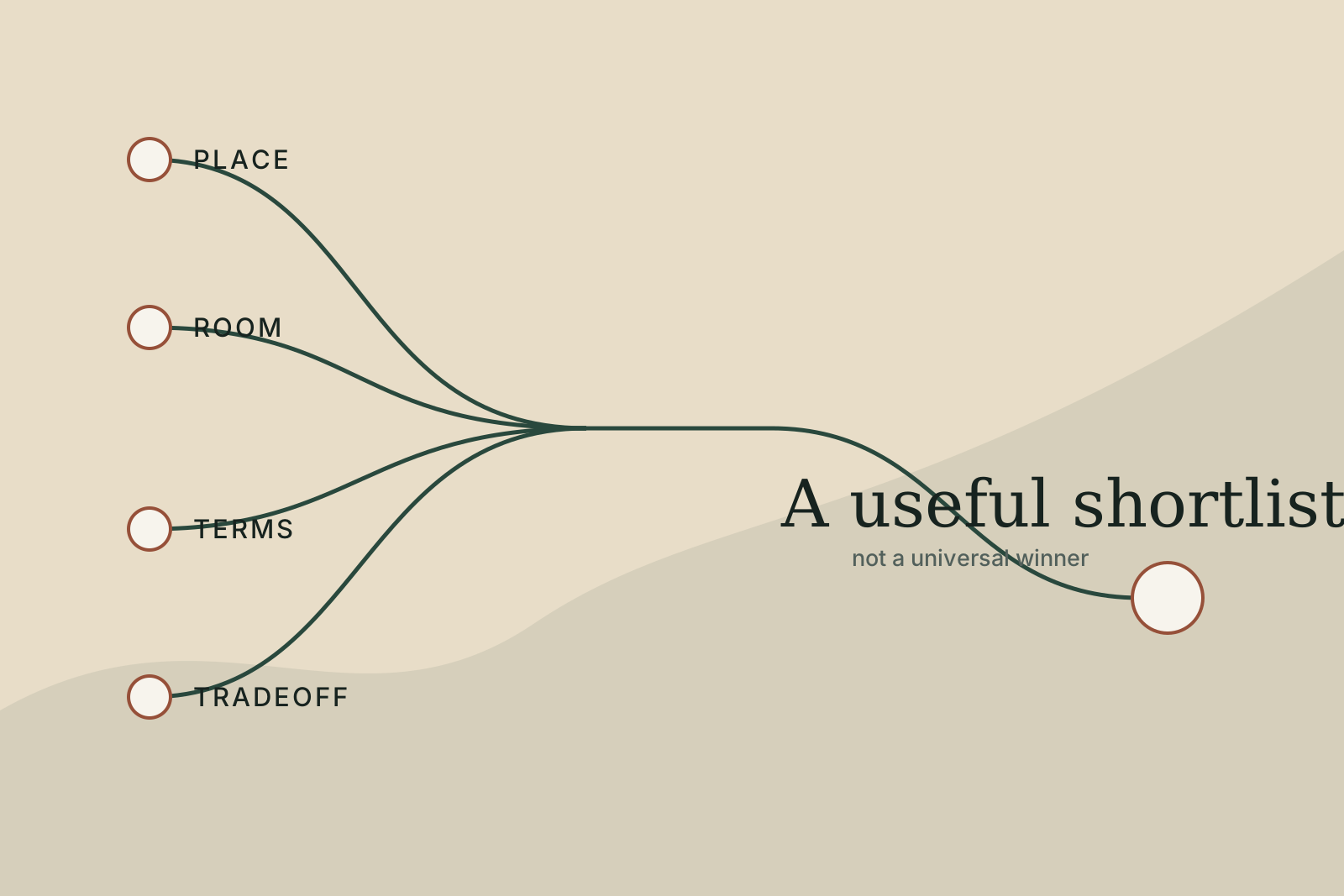
The best hotel on a list is not always the right hotel for a particular trip. A beautiful room can be awkwardly placed for the days you have planned. A perfect address can come with a room category that is too small, too uncertain, or too inflexible. A lower total can ask you to accept terms that make the trip harder to change.
The useful question is not “Which hotel is nicest?” It is “Which hotel best supports the way this trip will actually work?” The method below turns that question into four comparisons you can finish in one sitting.
Begin with one ordinary day
Choose a day that resembles the middle of the trip rather than its grandest occasion. Note where you expect to begin, the part of town you are likely to spend the afternoon, and what you want the evening to feel like. Then place each hotel against that geography.
A central pin on a map tells you very little on its own. Test the journeys that will repeat:
- the first departure, when you may be carrying a timed reservation;
- the return after dinner, when an extra change or long walk may feel different;
- the route to the main station or airport on the final morning;
- the nearby fallback when you are tired, it rains, or a plan changes.
Count the whole journey, not only the transit estimate. A seven-minute walk to the platform, an awkward exit, or a steep final block belongs in the comparison. So does the pleasure of stepping outside into a neighborhood you would choose to explore anyway.
This often reveals two different kinds of “convenient.” One hotel minimizes transport. Another makes the unplanned hours—breakfast, an evening walk, an easy meal—more enjoyable. Either can be the right answer, but they solve different problems.
Compare the room you can book
Ignore the hotel’s most memorable photograph for a moment. Open the description of the exact room category available for your dates. Record only what the property actually states or confirms.
Start with details that affect sleep and daily use: bed configuration, stated floor area, bathroom arrangement, maximum occupancy, and whether the outlook is defined or only illustrated. Then add the needs that are particular to your party: step-free access, space for a cot, a door between sleeping areas, two true beds, or a shower rather than a bath.
Treat words such as “request,” “subject to availability,” and “may vary” as uncertainty, not as confirmation. Connecting rooms and rooms near one another are different requests. A photograph captioned as representative does not establish a view or layout. If a feature would change your decision, ask for it in writing before relying on it.
For each finalist, finish this sentence: “The room works if ___ is confirmed.” If the blank contains several non-negotiable points, that room may be a fragile choice even when the hotel itself is compelling.
Put the terms beside the total
Compare like with like: same dates, same number of guests, same room category, same meal basis, and the same currency. Record the full quoted total before any clearly disclosed local charges, then note what is payable now and what is payable later.
The cancellation deadline needs a date, time, and time zone. “Free cancellation” is incomplete without them. Also note whether a deposit is refundable, whether a change requires repricing, and whether breakfast, taxes, resort or destination fees, and extra-person charges are included in the figure you are comparing.
Do not assume that a booking channel’s headline benefit applies to every rate or room. If a credit, breakfast, upgrade, or late checkout matters to the value calculation, identify the eligible rate and whether the benefit is confirmed or availability-dependent. An attractive possibility should not be counted as guaranteed value.
A simple worksheet is enough:
| Option | Exact room | Stay total and currency | Change/cancel point | Main uncertainty |
|---|---|---|---|---|
| Hotel A | Category and bed | Quote for all nights | Deadline in hotel time | View not defined |
| Hotel B | Category and bed | Quote for all nights | Deposit terms | Connecting room on request |
| Hotel C | Category and bed | Quote for all nights | Nonrefundable | Longer evening return |
The table is not a scoring system. It puts unlike offers on one page so the difference is visible.
Name the compromise
Every serious option gives something up. The goal is to choose the compromise that affects you least, not to pretend one hotel wins every category.
Write one line for each finalist: “I would choose this because ___, accepting ___.” Be specific. “Better” is too vague; “a fifteen-minute easier trip to the places we have booked, accepting a smaller room” is a decision you can evaluate.
Common trades include:
- neighborhood character versus the simplest transport connections;
- a more generous room versus a hotel you will enjoy spending time in;
- flexible terms versus a lower nonrefundable offer;
- a landmark outlook versus quiet, space, or privacy;
- extensive service versus a smaller, more informal atmosphere.
If you cannot name the compromise, there is probably a missing fact. If you can name it but dislike it every time you read the sentence, remove that option.
Use a stopping rule
Hotel searching expands easily because every new option resets the comparison. Decide what would justify adding another property: a materially better location, a room that resolves a requirement, a meaningful change in the total, or clearer terms.
Once two or three hotels meet the requirements and their compromises are understood, stop browsing and resolve the remaining questions. More tabs are not the same as more confidence.
The finished shortlist should be short enough to explain to another person. For each option, you should be able to say what it makes easier, what room you would book, what the offer includes, and what you would be giving up. That is a much sturdier basis for a decision than a folder of appealing photographs.